
The Evolving Landscape of Google Search
For decades, Google Search has been the primary gateway to information on the internet, constantly evolving to meet the complex needs of its users. The introduction of Artificial Intelligence (AI) Overviews and the more advanced AI Mode marks a significant paradigm shift in how users interact with search results and, consequently, how businesses and content creators must approach their online presence. These new generative AI capabilities are designed to make search experiences more effortless, providing immediate, synthesized answers to complex queries while still connecting users with the vast richness of the web.
This comprehensive guide will delve into the mechanics of AI Overviews and AI Mode, explaining their foundational principles, how they aim to be helpful, and the rigorous quality and safety measures Google has implemented. More importantly, it will explore the profound implications of these AI-powered search features for next-generation Search Engine Optimization (SEO) and digital marketing strategies. Understanding these changes is no longer optional; it is critical for anyone aiming to maintain visibility, drive traffic, and achieve success in the increasingly intelligent search environment.
AI Overviews: The Foundational Layer of Generative Search
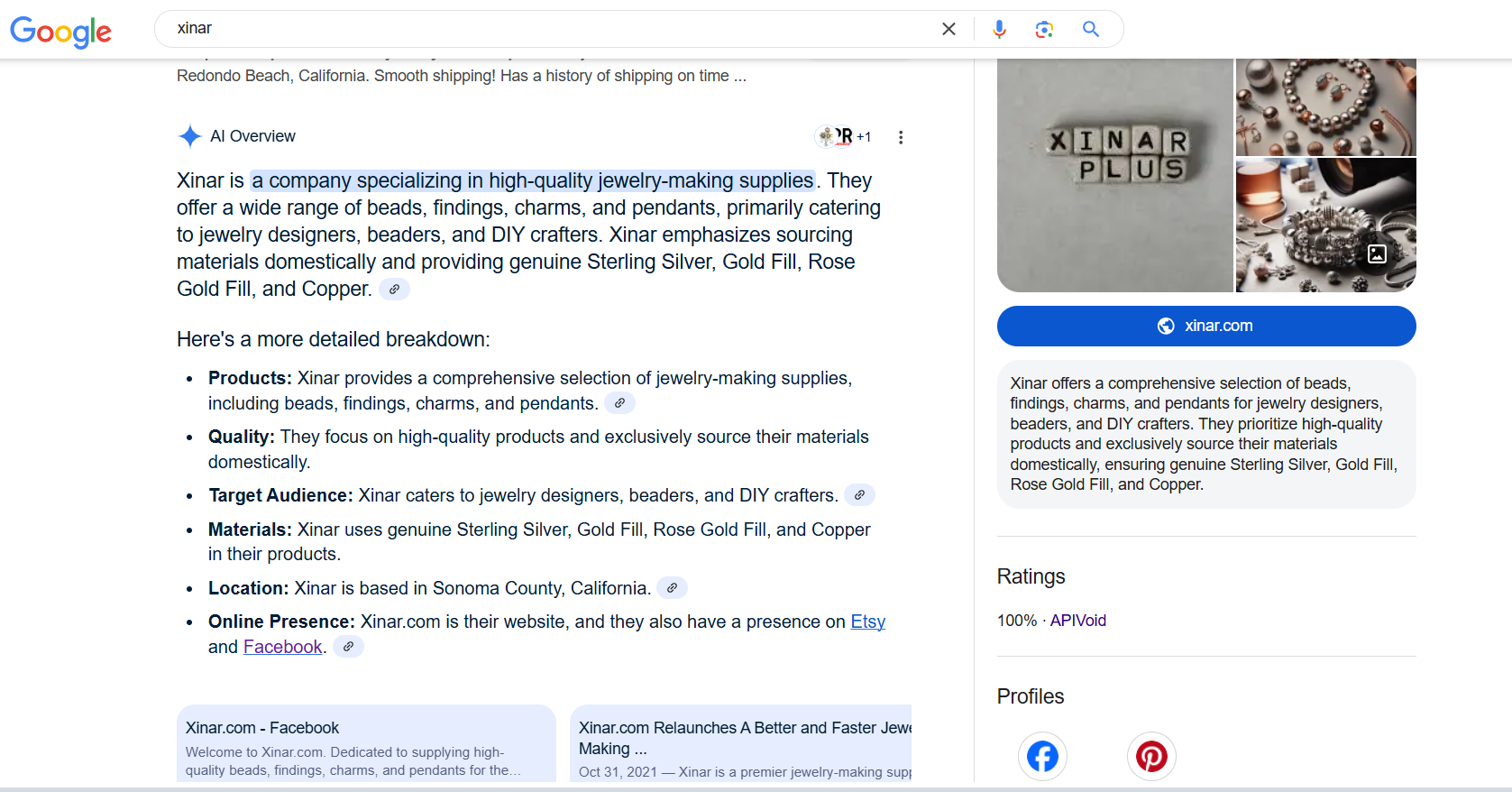
At its core, an AI Overview is Google’s initial foray into integrating generative AI directly into the main search results page. It represents a fundamental change from merely listing links to actively synthesizing information and presenting it directly to the user.
What are AI Overviews?
AI Overviews leverage generative AI to provide key, summarized information about a specific topic or question. Instead of requiring users to click through multiple links to find an answer, the AI Overview aims to deliver the “gist” of the information directly at the top of the Search Engine Results Page (SERP). Crucially, these overviews are not standalone AI-generated content; they are designed to be backed by and include prominent links to web content, encouraging users to “dig deeper and learn more on the web.” This dual approach ensures that while immediate answers are provided, the open web remains the ultimate source of truth and a destination for further exploration.
The adoption of AI Overviews has been substantial, with over 1.5 billion users worldwide utilizing this feature. Google’s data indicates that users who engage with AI Overviews tend to use Search more frequently and express higher satisfaction with their results. This suggests that the feature is successfully addressing user needs for quick, relevant information, leading to more complex queries and increased engagement with diverse sites, creators, and businesses, particularly among younger demographics (18-24).
Integration with Existing Search Systems
AI Overviews are not a separate entity operating in isolation; they are deeply integrated into Google’s existing, sophisticated Search infrastructure. This integration is vital for maintaining the quality, relevance, and safety that users expect from Google Search.
- Customized Gemini Model: The generative AI capabilities of AI Overviews are powered by a customized version of Google’s Gemini model. This model is specifically fine-tuned for the nuances of search queries, differing from a general LLM-based chatbot experience. Its primary function is to understand user intent, synthesize information from various sources, and present it coherently within the search context.
- Synergy with Quality and Ranking Systems: Perhaps the most critical aspect of AI Overviews is their tandem operation with Google’s long-established quality and ranking systems. These systems, refined over two decades, are fundamentally designed to surface reliable and relevant information. By integrating AI Overviews with these core systems, Google ensures that the information presented in the overview is not only synthetically generated but also rooted in the high-quality web results identified by its traditional ranking algorithms.
- Leveraging the Google Knowledge Graph: The Google Knowledge Graph, a vast repository of facts about people, places, and things, plays a crucial role in grounding AI Overviews in factual accuracy. By drawing upon this structured data, the AI can cross-reference and validate information, reducing the likelihood of inaccuracies or “hallucinations” that can sometimes plague large language models. This ensures that the generated summaries are factually sound and consistent with established knowledge.
- Traditional Search Tasks: Ultimately, AI Overviews are designed to carry out traditional “search” tasks. This means they are engineered to identify relevant, high-quality results from Google’s vast index to support the information presented in the overview. The AI acts as an intelligent curator and summarizer of existing web content, rather than a pure content generator from scratch.
How AI Overviews are Helpful: Enhancing the User Journey
The primary objective behind AI Overviews is to enhance the user’s search experience, making it more efficient and insightful. Google’s extensive testing through its Labs program helped identify key areas where generative AI could provide the most significant benefit.
Addressing Complex Questions and Getting the Gist
One of the most notable advantages of AI Overviews is their ability to tackle complex questions that might have previously required multiple, iterative searches. Instead of users having to piece together information from various sources, the AI Overview consolidates and summarizes the core concepts, allowing users to “get to the gist of a complicated topic or question more quickly.” This is particularly valuable for research, learning, or understanding multifaceted subjects where a quick, high-level understanding is needed before diving into specifics.
A Jumping-Off Point for Exploration
While providing immediate answers, AI Overviews are deliberately designed to serve as a “jumping off point” for further exploration. They achieve this by prominently including links to the web content that supports the information presented in the overview. This design philosophy acknowledges that users often come to Search not just for a single answer but to “find a range of perspectives and to explore the open web.” By facilitating deeper dives into diverse websites, AI Overviews aim to broaden users’ exposure to different sources and viewpoints, fostering a more comprehensive understanding of a topic.
Higher Quality Clicks and Increased Engagement
Google has observed a significant improvement in the quality of user engagement when AI Overviews are present. When users click from search result pages featuring AI Overviews, these clicks are described as “higher quality.” This means users are “more likely to spend more time on the site,” indicating that the AI has done a better job of connecting users with the most relevant and valuable information and websites for their specific needs. This suggests a more satisfied user experience, where the initial AI summary effectively filters and guides users to highly pertinent resources.
Triggering Criteria: Adding Value with Confidence
AI Overviews do not appear for every query. Google’s systems are designed to be selective, triggering an AI Overview only “where they can add additional benefit beyond what people might already get on Search today, and where we have high confidence in the quality of the responses.” This means AI Overviews are most likely to appear when the system determines that generative AI can be especially helpful, such as when a user needs to quickly understand information from a range of sources, or for queries that are inherently complex and benefit from synthesis. This selective triggering ensures that the AI-generated content is genuinely additive and not merely redundant.
Quality and Safety Protections for AI Overviews
Google places paramount importance on quality and safety, and this commitment extends to AI Overviews. The company has integrated its core Search quality and safety systems, refined over two decades, to ensure the reliability and trustworthiness of AI-generated content.
Rigorous Testing and Evaluation
Before a broad rollout, AI Overviews underwent an extensive and rigorous testing process. This included:
- Search Quality Rating Program: Utilizing human quality raters to evaluate the relevance, accuracy, and helpfulness of AI Overviews against established guidelines.
- Side-by-Side Analyses: Comparing AI Overview results with traditional search results to assess performance and identify areas for improvement.
- Adversarial Red-Teaming: A proactive process involving specialists who attempt to find vulnerabilities, biases, or potential issues with the AI’s outputs, including novel approaches specific to generative AI. This helps to identify and address potential problems before they impact users. Google emphasizes a continuous learning and improvement cycle based on these evaluations.
Corroborating Web Results and Mitigating Hallucinations
A key design principle for AI Overviews is that they “only show information that is supported by high-quality results from the web.” This fundamental approach is intended to:
- Mitigate Hallucinations: Unlike some other LLM experiences that might generate factually incorrect or nonsensical information, AI Overviews are designed to be grounded in verifiable web content. This significantly reduces the risk of “hallucinations.”
- YMYL Queries: For “Your Money or Your Life” (YMYL) queries—topics where information quality is critically important (e.g., health, finance, safety)—Google applies an even higher bar. AI Overviews for YMYL topics require supporting information from highly reliable and trustworthy sources. Furthermore, for many such queries, the AI Overview will explicitly advise users to “seek out expert advice or to verify the information presented,” underscoring the importance of professional consultation.
Safety Guardrails and Content Policies
Google has integrated its robust safety systems, such as SafeSearch, to prevent the appearance of harmful, hateful, explicit, or shocking content in AI Overviews. Additionally, AI Overviews adhere to Google’s comprehensive content policies for Search, including specific policies for features like featured snippets and autocomplete. These policies are designed to prevent content that is explicit, graphic, or could cause real-world harm. Automated systems are in place to prevent policy-violating content, with manual intervention for rare cases where such content might evade detection.
Spam Protection
To safeguard the integrity of AI Overviews, Google utilizes its core anti-spam protections. This includes:
- Tailored Updates: Recent updates have been specifically designed to prevent spammy results from appearing within AI Overviews.
- SpamBrain: Google’s AI-based spam-prevention system, SpamBrain, is actively used to protect against spam in AI Overviews and across Search more broadly. This continuous development of new techniques and ranking system updates aims to maintain a clean and reliable search experience.
Triggering Refinement and Addressing Data Voids
The selective triggering of AI Overviews also serves as a quality control mechanism. Systems are refined to prevent AI Overviews from appearing on queries about highly sensitive, explicit, or dangerous topics, where the risk of providing unhelpful or harmful information is too high.
Furthermore, AI Overviews address the challenge of “data voids”—searches for which there is limited high-quality information available on the web (e.g., uncommon or nonsensical queries). Improvements have been rolled out to limit AI Overviews from appearing on these searches, thereby preventing misleading, satirical, or otherwise unhelpful content from surfacing, which could otherwise fill these voids with low-quality information.
Continuous Innovation, Improvement, and Refinement
Google maintains a detailed review process to assess the quality of AI Overviews across various categories, including factuality, length, format, and clarity. This ongoing measurement and feedback loop, including direct user feedback, drives continuous improvement. The goal is to identify areas for enhancement and develop solutions that benefit a broad range of similar searches, ensuring that AI Overviews become increasingly helpful and accurate over time.
AI Mode in Search: The Next Evolution of Generative AI
Building upon the success and feedback from AI Overviews, Google introduced AI Mode as a more advanced and exploratory generative AI experience within Search. It’s designed for “power users” who desire deeper, more interactive AI-powered responses for a wider range of searches.
What is AI Mode?
AI Mode is presented as a new, optional tab in Search that users can choose to engage with. It expands significantly on the benefits of AI Overviews by offering “more advanced reasoning and multimodal capabilities.” The intention is to allow users to “go deeper through follow-up questions and helpful links to the web,” facilitating a more conversational and iterative search journey.
Early testing through Labs revealed that AI Mode queries were twice as long as traditional Google Search queries. Users leveraged AI Mode for “exploratory and open-ended questions,” as well as “more complicated tasks” such as comparing products, exploring how-to guides, and planning trips. This indicates a shift towards using Search for more complex, multi-faceted information needs that benefit from AI-driven synthesis and interaction.
How AI Mode Works: Advanced Capabilities
AI Mode operates on a custom version of the Gemini model, specifically optimized for queries requiring further exploration, reasoning, or comparisons.
- Nuanced Questions and Comprehensive Responses: AI Mode excels at handling nuanced questions that previously demanded multiple searches. It provides “a comprehensive AI-powered response with helpful links to explore further,” making it ideal for understanding new concepts or comparing various options.
- Real-Time Information and Query Fan-Out: AI Mode taps into real-time information from the web and Google’s internal data sources, including facts from the Knowledge Graph, real-world information, and extensive shopping data (over 50 billion products). A key innovation is the “query fan-out” technique: AI Mode concurrently issues multiple related searches across subtopics and various data sources. It then synthesizes these diverse results to provide an easy-to-understand, comprehensive response. This approach allows for greater breadth and depth of information than traditional search.
- Follow-Up Questions and Context Carry-Over: A significant feature of AI Mode is its ability to handle follow-up questions. The model’s native understanding of relationships between consecutive queries allows it to “carry over context from previous questions to refine the user’s intent and formulate a more precise, informed search.” This creates a more natural, conversational search experience, akin to discussing a topic with an expert.
- Multimodal Capabilities: AI Mode is multimodal, meaning it can process user questions through “voice, text, or images.” Users can, for instance, upload an image or snap a photo, ask a question about it, and receive a rich, comprehensive AI-powered response with relevant links. This opens up entirely new ways for users to interact with Search and retrieve information.
- Frontier Capabilities and Future of Search: AI Mode is positioned as the platform where Google will first introduce Gemini’s “frontier capabilities.” It serves as a glimpse into the future of Search, with the expectation that many features and capabilities refined in AI Mode will eventually “graduate” into the core Search experience, making AI-powered interactions more pervasive.
Accessing AI Mode
Users can access AI Mode in several ways:
- As a dedicated tab on the Search results page after entering a query.
- Directly by visiting google.com/aimode.
- Through the Google app by tapping the magnifying glass icon.
Enhancing User Interaction with Web Content
Despite its advanced AI capabilities, AI Mode, like AI Overviews, is designed to help people “ask new questions and connect them with the breadth of content and perspectives across the web.”
- Prominent Links: AI Mode continues to prominently surface relevant links, helping users discover web pages and content they might not have found through traditional search.
- Wider and More Diverse Content: The “query fan-out” technique allows AI Mode to identify and access “even more supporting web pages than was previously possible” while generating responses. This results in a “wider and more diverse set of helpful web content associated with the response,” creating new opportunities for exploration. Due to its more advanced models and novel techniques, AI Mode will likely present a different set of responses and links compared to AI Overviews for the same query.
- Visual Experience and Rich Content Formats: Google is continuously refining AI Mode’s user interface to be more visual and to incorporate “more types of rich content formats from a range of sources, like user-generated content.”
- Intelligent Linking: The models are trained to “intelligently determine when and how to link and best present information so it’s most useful and actionable.” This includes deciding when to include hyperlinks for tasks (e.g., booking tickets) or when to prioritize visual information for how-to queries.
Quality and Safety Protections for AI Mode
AI Mode inherits and expands upon the rigorous quality and safety protections established for AI Overviews, rooting its operations in Google’s core Search ranking, safety systems, and anti-spam measures.
Rooted in Core Search Systems
Like AI Overviews, AI Mode adheres to Google’s overall content policies for Search and specific policies for Search features. Its design ensures that information presented is “supported by high quality content from the web and other info sources.”
Novel Approaches for Factuality
To enhance factuality and reduce inaccuracies, AI Mode incorporates novel approaches:
- Agentic Reinforcement Learning (RL): In collaboration with Google DeepMind, custom training uses agentic RL to “reward the model to generate statements it knows are more likely to be accurate (not hallucinated) and also backed up by inputs.” This encourages the model to actively retrieve and add additional factual information from sources like the Knowledge Graph to support its claims.
Limitations and Considerations
Despite advanced protections, Google acknowledges that AI Mode, as an early-stage AI product, “won’t always get it right.” Transparency about these limitations is part of Google’s approach to setting clear expectations.
- Triggering Logic: AI Mode uses advanced reasoning for a wide range of queries. However, its systems may determine that certain questions are better answered by traditional web links or existing Search features, especially for sensitive situations (e.g., self-harm) or explicit content. If there isn’t high confidence in the helpfulness and quality of an AI-powered response, the mode will generally revert to showing web search results. Over time, as capabilities improve, AI Mode is expected to provide AI-powered responses for far more complex queries than AI Overviews currently do.
- Inaccuracies and Odd Responses (Hallucinations): While designed to mitigate hallucinations by relying on Google Search’s understanding of web content, AI Mode, as a large language model, “may sometimes confidently present information that is inaccurate.” It can also misinterpret web content or miss context. For unusual searches, responses might appear “odd” as they reflect the information available on the web relevant to that query.
- Opinionated Responses: AI Mode is designed to present information “as objectively and neutrally as possible” based on a wide range of web sources, avoiding taking positions on disputed topics. However, if the vast majority of web information on a topic reflects a particular perspective, the AI response may inadvertently reflect this imbalance. Users are encouraged to ask follow-up questions or revert to traditional Search for alternative viewpoints. While protections are in place to limit “persona” responses, this remains a known limitation of LLMs if prompted by a user.
- False Equivalence Responses: When comparing two topics, AI Mode’s objective and comprehensive design might occasionally lead to responses that “appear to equate or liken two topics or concepts that are not equivalent to one another.” This is an area of ongoing refinement.
- Context Across Follow-up Questions: AI Mode is designed to carry context across follow-up questions for relevance (e.g., asking about cats and dogs, then “Which one lives longer?”). However, this might not always work perfectly with multiple follow-ups, or context might be carried over when the user intended a new, unrelated search. This could lead to less relevant results.
- Query Variety: Different phrasing of similar questions can lead to different AI Mode responses, reflecting the nuances of how Google’s systems aim to provide responsive and relevant results based on varying perspectives available on the web.
- Satire and Humor: Google has made significant improvements in detecting satire and humor in queries for AI Overviews and is extending these protections to AI Mode to prevent offensive, unsafe, or misleading outputs.
- Math: AI Mode utilizes a customized Gemini model with advanced reasoning for complex math equations. While significant improvements have been made, mathematical errors can still occur, highlighting a persistent challenge area for large language models that Google continues to invest in.
Next-Generation SEO and Digital Marketing in the Era of AI Overviews and AI Mode
The advent of AI Overviews and AI Mode fundamentally reshapes the landscape of Search Engine Optimization (SEO) and digital marketing. The traditional focus on keywords and ranking positions is evolving into a more nuanced approach centered on intent, comprehensive understanding, and direct answers.
Shift from Keywords to Concepts and Intent
The most immediate impact is the shift from a purely keyword-centric approach to one focused on concepts, intent, and comprehensive answers.
- Direct Answers: AI Overviews provide direct answers, potentially reducing the need for users to click through to a website for simple, factual queries. This means content must be optimized not just to rank, but to be the source of the AI’s summary.
- Conceptual Understanding: AI models understand the underlying concepts and relationships between entities. SEOs must move beyond exact keyword matching to creating content that thoroughly addresses a topic, its subtopics, and related concepts. This involves answering common questions, providing definitions, and explaining processes in a holistic manner.
- Long-Tail and Complex Queries: AI Mode thrives on longer, more complex, and exploratory queries. This presents an opportunity for content creators to target these nuanced information needs with highly detailed, authoritative content. Users are asking more “how-to,” “compare X and Y,” and “plan a trip” type questions, demanding comprehensive, synthesized information.
Content Strategy for AI-Powered Search
Content remains king, but its creation and optimization must adapt to AI’s consumption patterns.
- Authoritative & Trustworthy Content (E-E-A-T): Google’s emphasis on corroborating web results and a higher bar for YMYL queries underscores the critical importance of Experience, Expertise, Authoritativeness, and Trustworthiness (E-E-A-T). For content to be selected as a source for an AI Overview or AI Mode response, it must be perceived as highly reliable.
- Demonstrate Expertise: Clearly showcase the author’s credentials, experience, and deep understanding of the topic.
- Build Authority: Accumulate high-quality backlinks, mentions, and positive sentiment across the web.
- Foster Trustworthiness: Provide transparent, accurate, and verifiable information. Cite sources where appropriate. For YMYL topics, this is non-negotiable.
- Comprehensive & Niche Content: AI Overviews and AI Mode are designed to synthesize information from a “range of sources” and handle “complex questions.” This means content should be:
- Holistic: Cover a topic in its entirety, addressing all common questions, related subtopics, and different facets of the subject.
- Deep: Provide in-depth analysis, research, and unique insights that go beyond surface-level information.
- Niche-Focused: While broad topics are covered, deep dives into specific niches or long-tail queries can position content as the definitive source for AI to draw upon.
- Structured Data & Semantic SEO: While not explicitly mentioned as a direct input for AI Overviews, structured data (Schema Markup) helps search engines understand the context and relationships of content on a page. Semantic SEO, which focuses on the meaning and relationships between words and concepts, aligns perfectly with how AI models process information.
- Implement Schema Markup: Use relevant schema types (e.g.,
HowTo,FAQPage,Product,Recipe) to explicitly define content elements for search engines. This can help AI better understand and extract specific pieces of information. - Build Topic Clusters: Organize content around central pillar pages and supporting cluster content, demonstrating comprehensive coverage of a topic. This signals to AI that your site is an authority on the subject.
- Implement Schema Markup: Use relevant schema types (e.g.,
- Clarity & Conciseness for AI Extraction: AI Overviews aim to provide the “gist.” This implies that content should be written with clarity and conciseness, making it easy for AI to extract key information.
- Clear Headings and Subheadings: Use a logical hierarchy of headings (H1,H2,H3, etc.) to structure content, making it scannable for both humans and AI.
- Direct Answers: Provide clear, direct answers to common questions within your content, often at the beginning of sections or in dedicated FAQ sections.
- Summary Paragraphs: Include concise introductory and concluding paragraphs that summarize the main points, which can be easily picked up by AI.
- Visual & Multimodal Content: AI Mode’s multimodal capabilities are a game-changer.
- Optimize Images and Videos: Ensure images have descriptive alt text, captions, and are high quality. Videos should have transcripts and relevant metadata. AI Mode’s ability to process images means visual content can become a direct input for queries.
- How-To Guides with Visuals: For “how-to” queries, prioritize visual explanations (diagrams, step-by-step images, video tutorials) as AI Mode is trained to prioritize visual information where beneficial.
- User-Generated Content (UGC): AI Mode is incorporating more “user-generated content.” This highlights the importance of fostering communities, reviews, and interactive platforms where users contribute valuable content.
Technical SEO Considerations
While content strategy takes center stage, foundational technical SEO remains crucial.
- Core Web Vitals: Page experience signals like Core Web Vitals (Largest Contentful Paint, First Input Delay, Cumulative Layout Shift) are still ranking factors. A fast, stable, and visually appealing user experience is essential for any content that hopes to be featured or linked by AI.
- Mobile-First Indexing: With the majority of searches happening on mobile, and AI Mode’s accessibility via the Google app, a mobile-first approach to website design and optimization is non-negotiable.
- Crawlability & Indexability: Ensure your site is easily crawlable and indexable by Google’s systems. A well-structured site with a clear sitemap and minimal crawl errors is vital for AI to access and understand your content.
- HTTPS: Secure websites (HTTPS) are a basic trust signal and a prerequisite for modern SEO.
Off-Page SEO & Authority Building
Off-page signals continue to inform AI’s understanding of content authority.
- Backlinks: High-quality backlinks from reputable sources remain a strong signal of authority and trustworthiness, which AI models will likely consider when selecting content for summaries.
- Brand Mentions & Reputation Management: AI can process and understand sentiment around brands and entities. Positive brand mentions, reviews, and a strong online reputation can subtly influence how AI perceives and utilizes your content. Monitoring and managing your brand’s online presence becomes even more critical.
Measuring Success in an AI-Driven Landscape
Traditional SEO metrics like organic clicks and impressions might evolve.
- Beyond Clicks: While clicks to your site are still valuable, success might also be measured by whether your content is consistently chosen as the source for AI Overviews, even if it doesn’t always result in a direct click. This indicates strong topical authority.
- Engagement Metrics: Focus on metrics like time on site, bounce rate (if users leave quickly after clicking), and conversion rates. Higher quality clicks, as noted by Google, mean users are spending more time on sites, which is a positive signal.
- Monitoring AI Overview Appearance: SEO tools will need to adapt to track when and how your content appears in AI Overviews and AI Mode responses. This includes identifying which specific pieces of information are being extracted.
- Adapting Analytics: Google Analytics and other platforms will need to provide insights into traffic sources from AI-generated overviews and how users interact with your site after encountering AI summaries.
Digital Marketing Implications
The impact extends beyond SEO to broader digital marketing strategies.
- Paid Search (PPC): The presence of AI Overviews at the top of the SERP could push organic and paid listings further down the page. Advertisers might need to re-evaluate bid strategies and ad copy to remain visible and compelling. The AI’s ability to summarize could also influence the types of queries users perform, potentially shifting demand for certain keywords.
- Content Marketing: The emphasis shifts to creating long-form, evergreen, and problem-solving content that serves as a definitive resource. Content marketers should aim to answer every conceivable question about a topic, making their content a prime candidate for AI synthesis. The focus should be on building a content library that establishes deep topical authority.
- Social Media: Social media can play a role in amplifying content and building brand authority, which indirectly supports E-E-A-T. Engaging with users and addressing their questions on social platforms can also provide insights into the types of complex queries AI Mode is designed to answer.
- Customer Journey Mapping: The customer journey becomes less linear. Users might get initial answers from AI Overviews, then delve deeper via AI Mode, and only then click to a website. Marketers need to understand these new touchpoints and optimize for each stage, ensuring a seamless experience.
- Personalization: AI’s ability to carry context across follow-up questions and understand nuanced intent opens doors for highly personalized marketing messages and content delivery. If AI can understand a user’s evolving needs, marketers can tailor their offerings more precisely.
Challenges and Limitations for SEOs and Marketers
While AI Overviews and AI Mode offer immense opportunities, they also present new challenges.
- Reduced Organic Clicks for Simple Queries: For straightforward, factual queries, users might get their answer directly from the AI Overview, negating the need to click through to a website. This could lead to a decrease in organic traffic for some content, particularly for informational queries that are easily summarized.
- Attribution Challenges: Pinpointing the exact impact of AI Overviews on traffic and conversions can be complex. If a user gets an answer from an AI Overview and then performs an action offline or later, attributing that action to the initial AI interaction becomes difficult. New attribution models may be needed.
- Adapting to Rapid Changes: AI technology is evolving at an unprecedented pace. SEOs and marketers must remain agile, continuously monitoring Google’s updates, experimenting with new strategies, and adapting their approaches as AI capabilities expand and integrate further into Search.
- Ensuring “AI-Friendly” Content Without Sacrificing Human Readability: The challenge lies in optimizing content for AI extraction (clarity, structure, direct answers) without making it robotic or unengaging for human readers. Content must serve both the AI’s need for structured information and the human need for compelling, readable narratives.
- Dealing with Potential AI “Hallucinations” or Misinterpretations: While Google has robust safeguards, the possibility of AI generating inaccurate or misleading information, or misinterpreting content, exists. This could lead to brand reputation issues if your content is associated with an erroneous AI summary. Monitoring how your content is summarized by AI will be crucial.
- Maintaining Objectivity and Avoiding Bias: AI Mode’s design aims for objectivity, but it can reflect the imbalance of information on the web. Marketers must ensure their content is balanced and avoids presenting overly opinionated views if they wish it to be broadly utilized by AI.
- The “Black Box” Nature: Understanding precisely why AI chooses certain content for its summaries can be challenging. The complex algorithms and machine learning models operate somewhat like a “black box,” making it harder to reverse-engineer optimal content strategies compared to traditional ranking factors.
Conclusion: Building the Future of Search Together
The introduction of AI Overviews and AI Mode represents a transformative moment in the history of Google Search. These generative AI capabilities are designed to make information access more effortless, provide comprehensive answers, and facilitate deeper exploration of the web. They signal a clear direction: Search is becoming more intelligent, conversational, and multimodal.
For SEOs and digital marketers, this is not merely an update but a fundamental shift in how visibility and success are achieved. The emphasis moves from simply ranking for keywords to becoming an authoritative, trustworthy, and comprehensive source of information that AI can confidently synthesize and present. Strategies must evolve to prioritize E-E-A-T, create deeply holistic content, embrace structured data, and optimize for multimodal interactions.
The future of Search is collaborative, with Google continually learning from user feedback and iterating on these AI features. Businesses and content creators must adopt a similar mindset: experiment, analyze, and adapt. By focusing on creating genuinely valuable, high-quality, and user-centric content, and understanding how AI consumes and presents information, organizations can not only survive but thrive in this exciting new era of AI-powered search, building the future of their online presence together with the evolving capabilities of Google. The journey ahead requires adaptability, a commitment to quality, and a keen eye on the ever-changing dynamics of how users find and consume information.
Do you need help navigating these confusing times in search? Send us an email or use the form below to get started.


 Digital Marketing Services and Content Outsourcing Philippines